Small Living Room Hacks: How to Make Your Space Feel Twice as Big
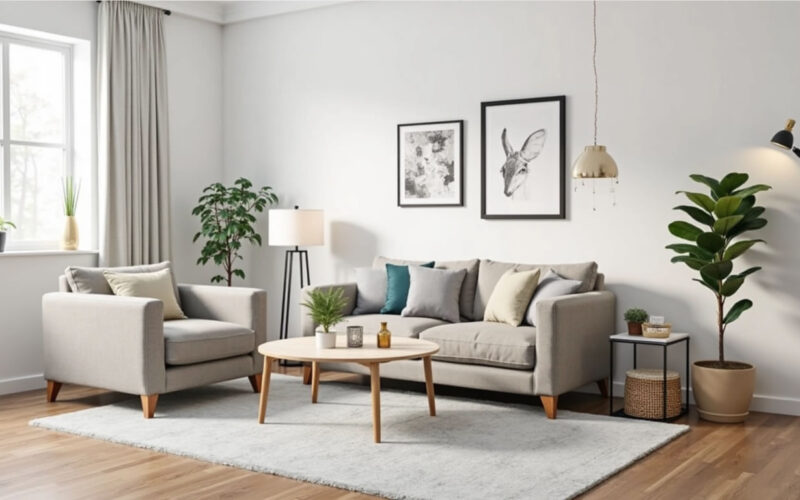
A compact living room doesn’t have to feel cramped or restrictive. With a few strategic interior design choices, you can trick the eye, maximize your available square footage, and make even the smallest living space feel bright, open, and double its size.
Whether you are living in an apartment or simply trying to optimize a cozy floor plan, here are 8 actionable design hacks to dramatically expand your small living room.
1. Harness the Power of Strategic Mirror Placement
Mirrors are the ultimate tool for expanding a small room. By reflecting both natural and artificial light, a well-placed mirror pushes back walls and creates the illusion of depth.
-
Position opposite windows: Hang a large mirror directly across from your main window to bounce natural light throughout the space.
-
Go vertical or full-length: A tall, floor-leaning mirror draws the eye upward, highlighting ceiling height while making floor space feel broader.
2. Elevate Curtains to the Ceiling
Low-hanging curtain rods cut a room in half visually. To instantly add height and drama to your living room:
-
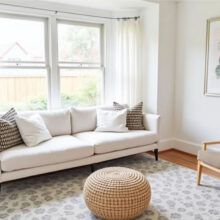
Hang curtain rods 2 to 3 inches below the ceiling (or crown molding) rather than right above the window frame.
-
Let lightweight, semi-sheer drapes puddle slightly at the floor to draw sightlines upward and create an elongated silhouette.
3. Choose Low-Profile Furniture with Exposed Legs
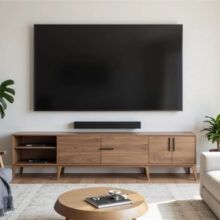
Bulky, floor-skirting sofas and heavy armchairs block sightlines and consume visual real estate. Instead, opt for furniture with raised, tapered legs and lower seat backs. Allowing light and air to pass underneath furniture gives the room an airy, lightweight feel that keeps floor space visually open.
4. Stick to a Light, Monochromatic Color Scheme
Dark, contrasting colors visually fragment a small room. A monochromatic or light color palette—utilizing soft whites, creams, light grays, or pale pastels—reflects light and blurs the boundaries where walls meet the ceiling.
-
Paint trim and walls the same color: Using the same light paint shade on walls, baseboards, and ceilings removes harsh dividing lines, expanding the room’s perceived boundary.
-
Layer tone-on-tone textures: Keep interest alive by mixing linen, bouclé, wood, and metallic accents rather than relying on heavy color contrast.
5. Scale Up Your Area Rug
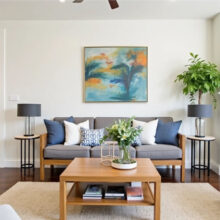
A common small-space mistake is choosing a tiny rug that floats awkwardly in the middle of the room. A small rug acts like a tiny island, shrinking the space. Instead, choose a large rug that extends under the front legs of all major furniture pieces—or better yet, covers most of the floor. A larger rug unifies the seating area and visually expands the room’s footprint.
6. Embrace Vertical Storage and Floating Shelves
When floor space is limited, look up. Utilizing vertical height keeps clutter off the floor while drawing attention to your ceiling height.
-
Install floating shelving units high on the walls for books and display objects.
-
Use tall, slender bookcases rather than wide, low credenzas to maximize storage without taking up precious floor acreage.
7. Select Multi-Functional and Modular Furniture
Every piece of furniture in a small living room should earn its keep. Look for multi-functional items that reduce clutter and save space:
-
Storage ottomans that double as coffee tables and footrests
-
Nesting tables that can be tucked away when not in use
-
Modular sofas that can be reconfigured based on your layout needs
8. Clear Sightlines with Glass or Acrylic Pieces
Materials like tempered glass, acrylic, and lucite are “invisible” to the eye. A clear glass coffee table or acrylic side chair serves a practical purpose without adding visual weight, allowing light to pass freely across the entire room.
Summary Checklist for Small Living Rooms
| Design Focus | What to Do | What to Avoid |
| Furniture | Exposed legs, low profiles, glass/acrylic tops | Heavy, skirted sofas and bulky pieces |
| Window Treatments | High-mounted, floor-length light drapes | Low rods and heavy, dark fabrics |
| Color Palette | Monochromatic tones, soft lights | High-contrast accent walls |
| Storage | Vertical floating shelves, multi-functional items | Wide floor credenzas and clutter |