The Essential Guide to Choosing Hardware for Cabinets and Doors
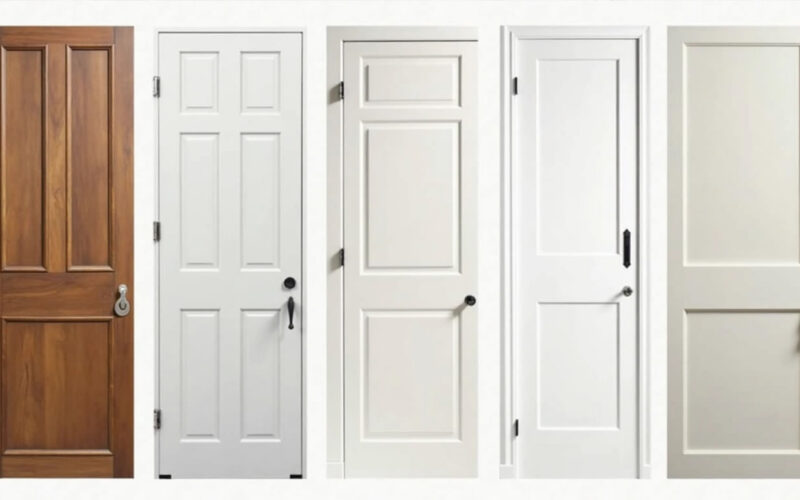
Cabinet knobs, pulls, and door handles are often called the “jewelry” of a room. While they are small in scale, hardware finishes and profiles play a major role in unifying a design style, adding tactile quality, and tying together surrounding lighting fixtures and plumbing trim.
Whether you are updating a kitchen, designing custom built-ins, or replacing interior door handles, here is how to choose the right hardware size, finish, and style for every space.
1. Knobs vs. Pulls: The Universal Application Formula
While there are no hard rules, following standard placement formulas ensures both ergonomic comfort and clean visual balance across your cabinetry.
-
The Standard Rule of Thumb: Use knobs on cabinet doors and pulls on cabinet drawers.
-
Modern Alternative (All Pulls): Using sleek pulls across both doors and drawers creates a cohesive, streamlined look ideal for contemporary or modern minimalist kitchens.
-
Classic Alternative (All Knobs): Using knobs on both doors and small drawers lends a charming, vintage-inspired or cottage feel.
┌────────────────────────────────────────────────────────────────────────┐
│                        HARDWARE SELECTION FORMULA                      │
│                                                                        │
│   CABINET DOORS ──────────►  KNOBS                                     │
│                              (Centered on stiles opposite hinges)      │
│                                                                        │
│   STANDARD DRAWERS ───────►  SINGLE PULL                               │
│                              (1/3 the drawer width rule)               │
│                                                                        │
│   WIDE DRAWERS (30"+) ────►  TWO PULLS OR ONE EXTRA-LONG PULL          │
│                              (Prevents uneven drawer glide)            │
└────────────────────────────────────────────────────────────────────────┘
2. Perfect Sizing and Proportions
Hardware that is too small looks lost on large cabinetry, while oversized pulls can overpower delicate drawer fronts.
Pull Length (Center-to-Center)
Measure the distance between screw holes (center-to-center distance) to ensure proper scale:
-
Small-to-Medium Drawers ($12\text{ to }24\text{ inches}$ wide): Choose pulls that are approximately $\frac{1}{3}$ the width of the drawer front (e.g., $3\text{ to }4\text{ inch}$ or $96\text{mm}\text{–}128\text{mm}$ pulls).
-
Large Drawers ($24\text{ to }36\text{ inches}$ wide): Choose longer pulls ($6\text{ to }8\text{ inches}$) or install two smaller pulls spaced evenly across the drawer front.
-
Oversized Drawers / Appliances ($36\text{ inches}+$ wide): Use extra-long appliance pulls ($10\text{ to }18\text{ inches}$) designed to withstand heavy pulling weight.
3. Mixing Finishes Like a Designer
You do not need to match every metal finish in a room perfectly. In fact, mixing hardware finishes adds richness and layered character. (Recall our rules on mixing materials and textures for balanced contrast!)
-
Limit to 2 Finishes per Room: Pick one dominant metal ($70\%$) and one accent metal ($30\%$). For example, pair matte black cabinet pulls with warm brushed brass light fixtures and faucets.
-
Pair Warm with Cool: Match cool metals (like chrome, polished nickel, or iron) with warm metals (like brushed brass, champagne bronze, or leather) to create intentional visual contrast.
-
Consider Touch & Maintenance: Polished chrome and black show fingerprints easily, whereas brushed nickel, antique brass, and oil-rubbed bronze are far more forgiving in high-traffic zones like kitchens and entryways.
┌────────────────────────────────────────────────────────────────────────┐
│                        METAL FINISH COMBINATIONS                       │
│                                                                        │
│   DOMINANT METAL (70%)             ACCENT METAL (30%)                  │
│   ┌────────────────────────┐       ┌────────────────────────┐          │
│   │   MATTE BLACK HARDWARE │ ───►  │  BRUSHED BRASS LIGHTS  │          │
│   └────────────────────────┘       └────────────────────────┘          │
│   ┌────────────────────────┐       ┌────────────────────────┐          │
│   │  POLISHED NICKEL FAUCET│ ───►  │  ANTIQUE BRONZE PULLS  │          │
│   └────────────────────────┘       └────────────────────────┘          │
└────────────────────────────────────────────────────────────────────────┘
4. Matching Hardware Style to Home Architecture
| Interior Style | Hardware Style | Ideal Finishes | Key Features |
| Modern / Contemporary | Sleek bar pulls, edge pulls, cutout finger grooves | Matte Black, Polished Chrome, Satin Brass | Clean lines, square edges, minimal ornamentation |
| Transitional | Soft square knobs, curved arch pulls, cup pulls | Champagne Bronze, Brushed Nickel | Blends traditional curves with streamlined profiles |
| Traditional / Heritage | Detailed drop handles, glass knobs, latch locks | Antique Brass, Oil-Rubbed Bronze, Pewter | Intricate moulding details, warm vintage patina |
| Boho / Eclectic | Ceramic hand-painted knobs, leather strap pulls, stone inserts | Warm Brass, Natural Leather, Unlacquered Copper | Tactile materials, organic shapes, artisan detail |
5. Interior Door Hardware Basics
Do not forget interior doors when planning your hardware refresh. Matching door levers or knobs throughout a hallway creates an immediate sense of cohesion.
-
Levers vs. Knobs: Levers offer a modern look and superior universal accessibility (easier to open with full hands), whereas traditional round/oval knobs suit classic or historic homes.
-
Function Types:
-
Passage (Hall/Closet): Non-locking handles for interior doors that don’t require privacy.
-
Privacy (Bed/Bath): Locking handles featuring a pin or button mechanism inside.
-
Dummy: Stationary handles mounted on non-latching double doors or pantry doors.
-
Cabinet & Door Hardware Cheat Sheet
| Cabinet / Door Type | Recommended Hardware | Placement Rule |
| Upper Cabinet Doors | Knobs or vertical pulls | Bottom corner opposite hinge ($2\text{“}$ from bottom/edge) |
| Lower Base Cabinet Doors | Knobs or vertical pulls | Top corner opposite hinge ($2\text{“}$ from top/edge) |
| Standard Drawers | Single horizontal pull | Centered vertically and horizontally on drawer face |
| Deep Pan / File Drawers | Extra-long pull or two standard pulls | Proportionate to $1/3$ width rule for heavy pulls |
| Interior Doors | Matching passage/privacy levers | Mounted at standard height ($36\text{“}\text{–}40\text{“}$ from finished floor) |
By paying attention to proportions, limiting metal finish mixes, and matching profiles to your room’s design style, hardware can effortlessly transform standard doors and cabinetry into custom-built features.