How to Style Open Bookshelves and Built-Ins with Elegance
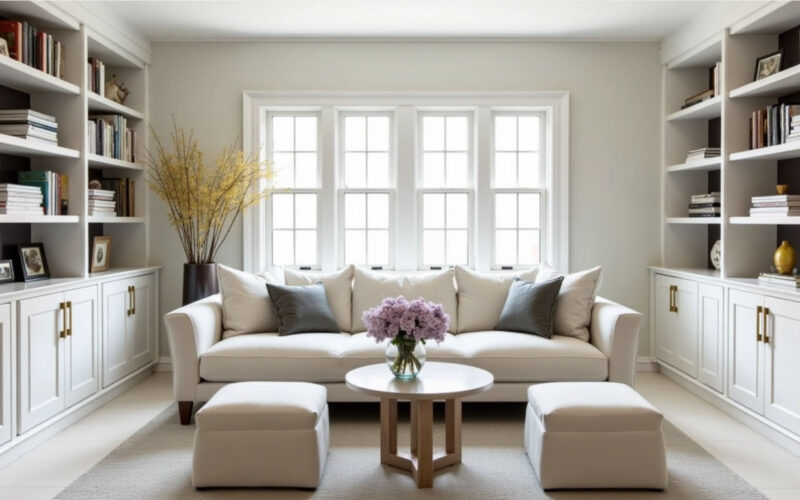
Open bookshelves and built-ins often become “catch-all” spaces for random paperwork, clutter, or visual noise. When styled intentionally, however, they serve as dramatic focal points that tell your personal story while adding texture, height, and elegance to a room.
The key to professional shelf styling is treating books as architectural elements rather than just reading material, balancing solid weight with negative space, and layering high-tactile objects.
Here is the exact step-by-step formula to style open shelves like an interior designer.
1. Start with a Completely Empty Canvas
Before adding or rearranging a single item, remove everything from your shelves.
-
Clean Slate: Emptying the shelves allows you to evaluate the overall proportions, lighting, and frame structure without being biased by existing layouts.
-
Group Your Decor: Organize your items on a nearby table by category: hardback books (grouped by color/size), tall vessels/vases, sculptural objects, framed art, and natural organic elements.
┌────────────────────────────────────────────────────────────────────────┐
│                        SHELF STYLING HIERARCHY                         │
│                                                                        │
│   ┌────────────────────────────────────────────────────────────────┐   │
│   │                 1. BOOKS (60% OF VISUAL WEIGHT)                │   │
│   │         (Stacked Horizontally & Arranged Vertically)           │   │
│   └───────────────┬────────────────────────────────┬───────────────┘   │
│                   │                                │                   │
│                   ▼                                ▼                   │
│   ┌───────────────────────────────┐ ┌──────────────────────────────┐   │
│   │ 2. SCULPTURAL OBJECTS (25%)   │ │   3. ORGANIC / BOTANICALS(15%)│   │
│   │ (Vases, Trays, Framed Art)    │ │   (Trailing Plants, Wood)    │   │
│   └───────────────────────────────┘ └──────────────────────────────┘   │
└────────────────────────────────────────────────────────────────────────┘
2. Anchor with Books Using the “Zig-Zag” Method
Books provide structural grounding. Remove paper dust jackets to expose the rich cloth and linen book spines underneath for a far more elevated, timeless look.
-
Mix Horizontal and Vertical Stacks:
-
Vertical: Group $3\text{ to }5$ books vertically, anchored by a heavy stone or brass bookend.
-
Horizontal: Stack $2\text{ to }3$ large hardcover books horizontally to act as pedestals for smaller decorative items.
-
-
The Zig-Zag Pattern: Place a book stack on the top-left shelf, then place the next stack on the middle-right shelf, and the next on the bottom-left shelf. This “zig-zag” arrangement balances visual weight across the entire unit.
┌────────────────────────────────────────────────────────────────────────┐
│                        ZIG-ZAG BALANCE PATTERN                         │
│                                                                        │
│   ┌────────────────────────┐       ┌────────────────────────┐          │
│   │ [===] BOOK STACK (LEFT)│       │                        │          │
│   └────────────────────────┘       └────────────────────────┘          │
│   ┌────────────────────────┐       ┌────────────────────────┐          │
│   │                        │       │ [===] BOOK STACK (RIGHT│          │
│   └────────────────────────┘       └────────────────────────┘          │
│   ┌────────────────────────┐       ┌────────────────────────┐          │
│   │ [===] BOOK STACK (LEFT)│       │                        │          │
│   └────────────────────────┘       └────────────────────────┘          │
└────────────────────────────────────────────────────────────────────────┘
3. Layer Art and Decorative Objects
Once your books are placed, fill in the remaining spaces with decorative objects that vary in scale, material, and reflection.
-
Layer Framed Art at the Back: Lean small framed prints or black-and-white photos directly against the back wall of a shelf, placing a horizontal book stack or small bowl slightly in front to create depth.
-
Elevate with Book Pedestals: Place small sculptural items—like a brass link, marble bowl, or vintage object—directly on top of your horizontal book stacks.
-
Vary Object Heights: Pair a tall ceramic vase with a short, wide decorative dish to keep sightlines moving dynamically.
4. Integrate Natural and Organic Textures
To prevent built-ins from looking like rigid, sterile store displays, bring in organic warmth and living accents.
-
Trailing Greenery: Place a low-maintenance trailing plant (like a Pothos or Philodendron) on an upper shelf, letting the vines drape down softly over the wood or painted edges.
-
Warm Wood Tones: Incorporate wooden beads, carved teak bowls, or natural rattan baskets on lower shelves.
5. Embrace Negative Space (The 30% Rule)
The secret to elegant bookshelf styling isn’t what you put on the shelf—it’s what you leave off.
-
Leave Breathing Room: Aim to leave roughly 30% of each shelf empty. Overcrowding causes visual fatigue.
-
Step Back and Edit: Once you finish styling, step back $8\text{ to }10\text{ feet}$ to evaluate the whole unit. If one side feels too heavy, remove an object or spread out your color tones until the arrangement feels harmonious.
Open Bookshelf Styling Cheat Sheet
| Category | Best Item Choice | Styling Purpose |
| Foundation (60%) | Linen-spine hardcover books | Creates structural weight & pedestal bases |
| Sculptural (25%) | Brass objects, stoneware vases, marble bowls | Adds height variation & material contrast |
| Organic (15%) | Trailing Pothos, terracotta, wood beads | Softens rigid shelf grids with natural movement |
| Background Depth | Small framed art, ceramic plates | Draws the eye back, creating layer depth |
| Lower Shelves | Large woven baskets, covered storage boxes | Hides functional clutter while anchoring the base |
By stripping away dust jackets, balancing book stacks in a diagonal zig-zag, layering textures, and honoring negative space, you can style built-in shelves that feel curated, elegant, and timeless.