How to Use Mirrors to Brighten and Expand Dark Rooms
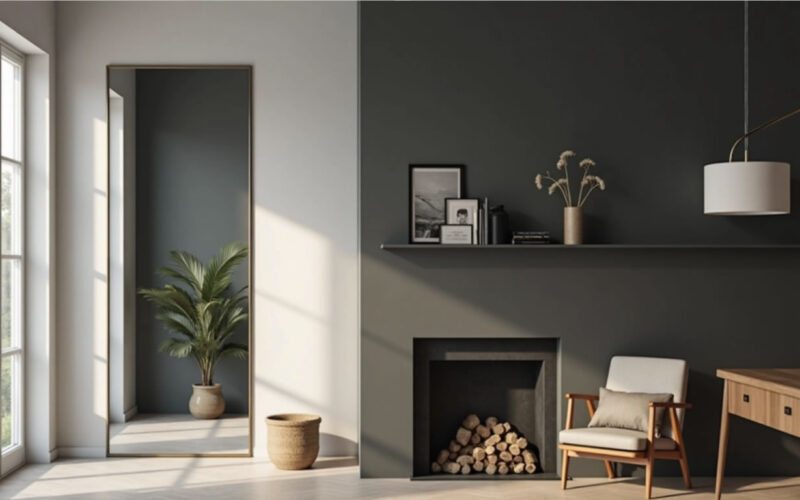
Mirrors are one of the most powerful tools in interior design. When placed strategically, they function like artificial windows—bouncing natural and artificial light into dim corners, blurring spatial boundaries, and making compact or low-light rooms feel twice as large and bright.
Here is how to position and style mirrors to maximize light and spatial depth in dark rooms.
1. The Direct Reflection Rule: Bounce Light from Windows
To immediately double the amount of natural light in a dark room, place a mirror directly opposite or adjacent to your primary light source.
-
Reflecting Windows: Hang a large wall mirror directly across from a window. Sunlight striking the mirror bounces deep into the room rather than absorbing into dark walls.
-
Reflecting Artificial Light: In windowless rooms (like basements or powder rooms), position a mirror across from or directly behind a warm table lamp, wall sconce, or pendant light to multiply its glow.
┌────────────────────────────────────────────────────────────────────────┐
│                        LIGHT REFLECTION LAYOUT                         │
│                                                                        │
│   ┌──────────────────┐                            ┌──────────────────┐ │
│   │   PRIMARY LIGHT  │                            │   WALL MIRROR    │ │
│   │   SOURCE / WINDOW│ ─────── DIRECT LIGHT ────► │  (Bounces Light  │ │
│   │                  │ ◄────── BOUNCED LIGHT ───  │   Deep Into Room)│ │
│   └──────────────────┘                            └──────────────────┘ │
│                                                                        │
│   ══════════════════════════════════════════════════════════════════   │
│   EXPANDED ILLUMINATED ZONE                                            │
└────────────────────────────────────────────────────────────────────────┘
2. Create the Illusion of an Extra Window with Grid Mirrors
If a dark room lacks architectural interest or window openings, use a windowpane or grid mirror.
-
Architectural Illusions: A large mirror featuring a thin black, brass, or wooden grid overlay mimics the look of a traditional multi-pane window.
-
Focal Point Placement: Hang it centrally above a mantel, sofa, or dining console to trick the brain into perceiving an outdoor view and an extra architectural opening.
3. Go Full-Height with Floor-Length Leaning Mirrors
Small wall mirrors add localized brightness, but large floor-length mirrors change the scale and height perception of the entire room.
-
Draw the Eye Upward: Lean a tall, slender floor mirror ($6\text{ to }7\text{ feet}$ tall) against a wall. The vertical reflection pulls the ceiling line upward, making low or dark ceilings feel considerably higher. (Combine this with our high-and-wide curtain placement rules for maximum vertical expansion!)
-
Expand Floor Square Footage: Because the mirror reflects the continuous floor plane right up to the wall, it creates the optical illusion that the room extends far beyond its physical footprint.
┌────────────────────────────────────────────────────────────────────────┐
│                        TALL LEANING MIRROR LAYOUT                      │
│                                                                        │
│   ══════════════════════════════════════════════════════════════════   │
│   CEILING LINE                                                         │
│                                                                        │
│                       ┌────────────────────────┐                       │
│                       │  TALL LEANING MIRROR   │                       │
│                       │   (6–7 Feet Height)    │                       │
│                       │                        │                       │
│                       │ Reflects Ceiling Line  │                       │
│                       │   & Continuous Floor   │                       │
│                       │                        │                       │
│                       └────────────────────────┘                       │
│                                                                        │
│   ══════════════════════════════════════════════════════════════════   │
│   FLOOR LEVEL                                                          │
└────────────────────────────────────────────────────────────────────────┘
4. Position Mirrors Behind Key Furniture Anchors
Nesting mirrors behind heavy furniture pieces eliminates dark shadows and prevents bulky items from overwhelming a small space.
-
Behind Bedside Tables / Lamps: Hang matching tall, narrow mirrors directly behind the lamps on both nightstands. The lamp light reflects straight forward, illuminating the entire bed wall.
-
Behind a Console Table or Credenza: Place a wide horizontal or oversized round mirror above a dark entry console or buffet to brighten the furniture footprint.
5. Mind What You Reflect (Avoid Clutter Traps)
A mirror amplifies whatever sits in front of it. Reflecting a messy desk, open storage rack, or cluttered corner will instantly double the visual chaos in a room.
-
Reflect Beauty & Light: Aim reflections toward open space, artwork, greenery, warm lighting, or outdoor views.
-
Reflect Organic Elements: Position a plant in front of a mirror to double its lush greenery, reinforcing a fresh, biophilic environment.
Mirror Placement Cheat Sheet for Dark Spaces
| Mirror Type | Best Placement | Design Benefit |
| Large Oversized Wall Mirror | Opposite or adjacent to a main window | Bounces natural light deep into dark corners |
| Grid / Windowpane Mirror | Centered above sofa, mantel, or credenza | Creates the optical illusion of an extra window |
| Tall Leaning Floor Mirror | Blank corner or opposite entry door | Extends floor plane and increases perceived ceiling height |
| Matching Twin Wall Mirrors | Behind bedside lamps on nightstands | Multiplies warm ambient lamp light in dark bedrooms |
By pairing mirrors with light sources, choosing windowpane grids, using floor-length vertical scales, and being mindful of what is reflected, you can effortlessly make any dark room feel expansive, bright, and airy.